Master's Research Programs
CLIMATE CHANGE AND ENERGY
MRP-CCE
Summary of the first day of the stakeholder meeting of the CIREG project

Opening Ceremony
After the registration of participants, the stakeholder meeting started with the opening ceremony moderated by Dr. Seyni Salack of WASCAL CoC. He briefly exposed the objectives and agenda of the meeting before introducing the guests of honour sitting on the high table for this opening ceremony (Photo 1). Pr. Yacoubou Bakasso, the Dean of the FAST/UAM, I his address, expressed his warm welcome to all participants and wished they would enjoy their stay in Niamey while working together in the next 1.5 days on the objectives of the workshop. Pr. Hassirou Mahammadou, representing the Chair of WASCAL Advisory Board including the Executive Director, thanked the participants for accepting the invitation to be at this workshop. He presented WASCAL as an intergovernmental organization establish combat climate change and improve livelihood of people in West Africa through research, human & infrastructure capacity building. This stakeholder meeting is seen as a proof of facts that WASCAL playing its role and responsibilities endowed onto it by member countries and ECOWAS. He wished his welcome to all participants and hoped they achieve the expected results of the meeting. Dr. Stefan Liersch, CIREG project manager from Potsdam Institute for Climate Impact Research (PIK) also welcome the participants and summarized the objectives of the CIREG project. According to Dr. Stefan, this meeting was organized to establish first contact with stakeholders, to introduction of the project and identify user-needs for climate information. He also tendered the good will of his institution and the funders of the project to follow up with the outcomes of this meeting as well as the other implementation activities. In his opening statement, Pr. Rabani Adamou, Deputy Vice-Chancellor of UAM and Director of WASCAL-CCE put the meeting into the general context of development in West Africa. According to Pr. Rabani, despite high potential in renewable energy resources in their countries, rural & peri-urban population in West African are least covered with both conventional and renewable electricity. He urged the participants to work together to identify the gaps, the user-needs, the challenges and share their experiences to support a better implementation of the CIREG project. He ended his opening statement by thanking all participants for accepting to come to Niamey, the European Commission (EUC) for the financial support and wished for more collaboration between WASCAL, UAM, the EUC and partners.
Photo 1]: Opening ceremony, high table
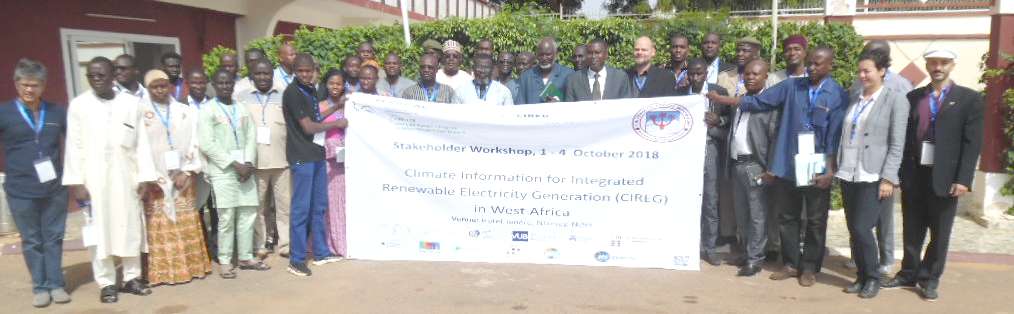
Before, taking a break, the Participants gathered for a group photo (Photo 2). Oral presentations started with an overview on the CIREG project by Dr. Stefan. The motivation for setting up the CIREG project was mainly to support access to electricity in rural and urban areas due to the projected population growth rate in West Africa (WA) by the 2050 and the growing electricity demand in the next 10-15 years. The overall goal of the project is to inform and influence decision-making in the energy sector by supporting the leap frogging on renewable technologies.
[Photo 2]: Family photo
Talks
On behalf of Sebastian Sterl of VUB, Dr. Hagen Koch of PIK presented the complementarity of wind, solar and hydropower potentials in West Africa. This presentation showed that:
estimating the true potential of renewable energy requires data,
in West Africa, the potential for solar wind hybrid electricity production is more important in Senegal, Burkina Faso, Niger, Mali and Nigeria,
preliminary results on hydropower indicate high potential for integrated intermittent renewable energy supply,
there is a need for rationalisation of investments in the solar-, wind-, hydro-electricity exchange sector.
Dr. Hagen also presented the reservoir operations under climate variability and hydropower for grid balancing in hybrid electricity systems. The presentation was about process-based eco-hydrological model SWIM, hydropower generation (example from the Upper Niger Basin) and hydropower for grid balancing in hybrid electricity systems. Furthermore, Dr Devaraj De Condappa talked about CIREG tools and capacity building potentials with WEAP/LEAP to:
explore issues/scenarios relevant to the stakeholders,
provide training on WEAP and LEAP which open source tools and free use to researchers, and
organise user-dialogue events to build the models, analysis results and report results of for decision making.
Dr. Roberto Cantoni talked about the local case studies and demonstrator, followed by the presentation on the local demonstrator at Sekoukou village by Dr. Ibrahim Boubacar. Dr. Roberto reviewed exciting achievements and potentialities in West Africa regarding renewable energy generation with particular insights in the Volta-Niger basins. The demonstrator at Sekoukou consists of a photovoltaic water pumping system used to distribute water for consumption to households through three fountains. The system is managed and maintained by a community villagers of Sekoukou.
Interesting discussions occurred around these presentations and the main conclusions are as followed:
the impacts of the project on socio-economy and environment depend on the interaction between CIREG and its stakeholders, good decisions making, collaboration, communication and integration between both parties.
The stakeholders’ contribution to the project is to support all components of the CIREG project [modelling, demonstrators, case studies, etc.].
The choice for solar, wind and hydro power is usually hampered by lack of information and accurate data on renewable energy generation. Furthermore, the timescale of the project does not allow the use of biomass for energy.
Plenary discussion
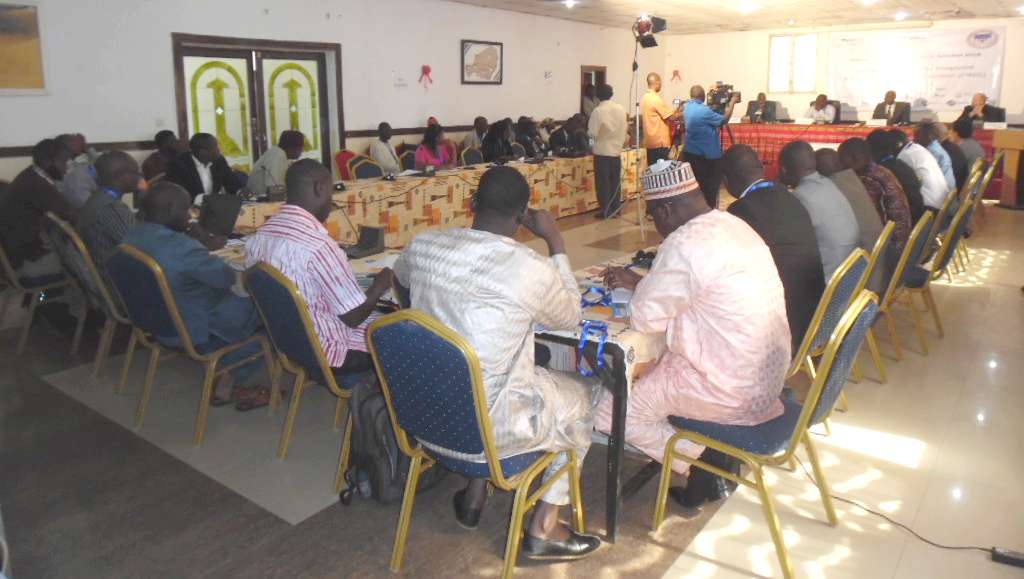
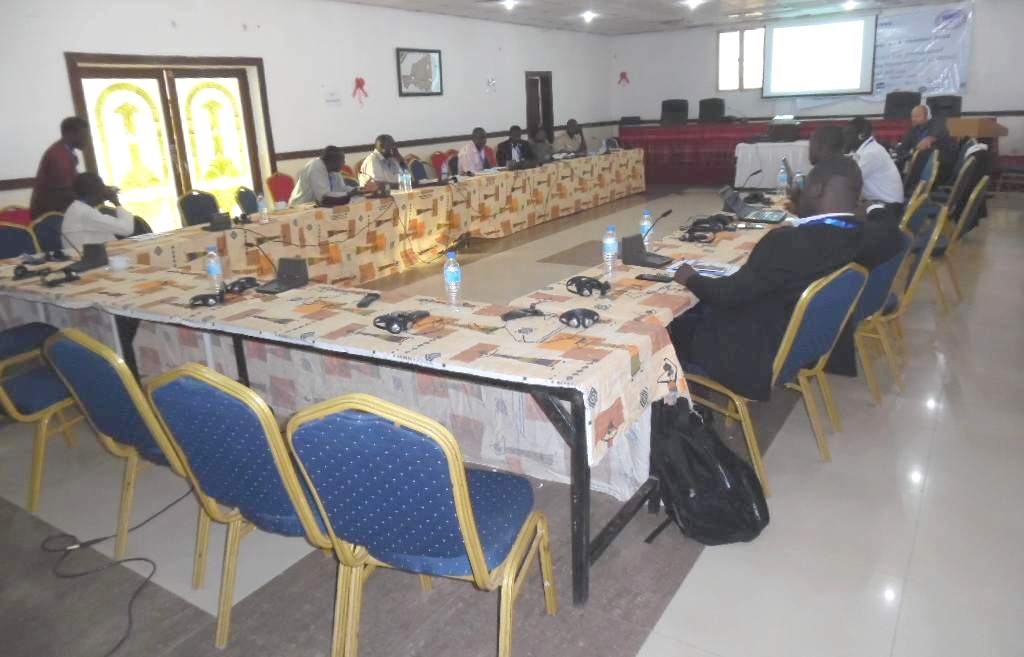
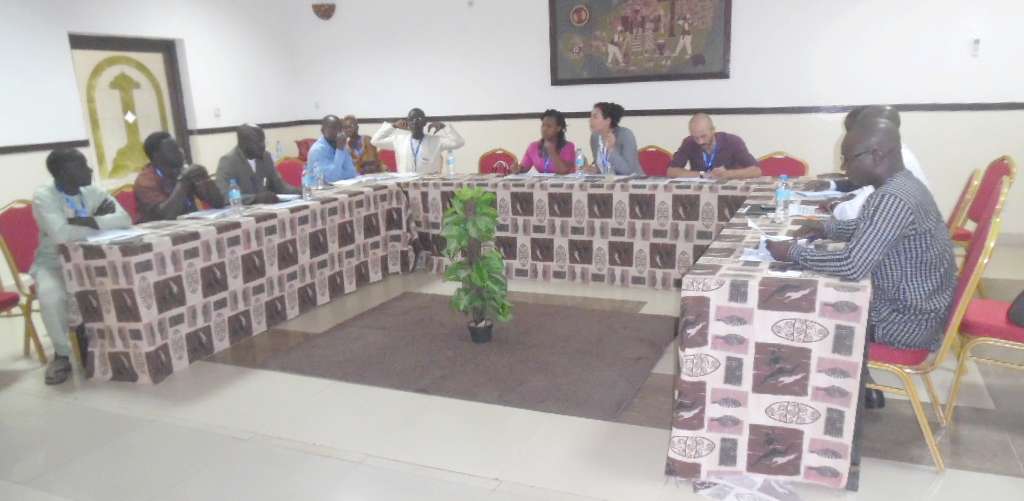
The plenary discussions were held in afternoon around topics such as “knowledge gaps and information sharing”, “factors that may hamper RE generation in W/A” and “on-going initiatives similar to CIREG”. Many participants shared the experiences acquired in the framework of RE generation and deployment in rural and urban areas of Togo, Niger, and Burkina Faso and Ghana. Among the on-going initiatives, the national framework of climate services (NFCS) was mentioned. Some major challenges facing the NFCS were related to data availability, quality & sharing, capacity building of actors and data scales mismatch. The National Center for Solar energy of Niger (CNES) also talked about a project called PAC3 implemented in Balleyara which is similar to CIREG project without the research component. Other on-going projects were presented like Sustainable Energy for all (SE4ALL) and NESAP. In Ghana, ACEP, the energy company is working to establish energy in all Ghanaian regions. But the challenges identified were more related to energy access, vandalism on equipment, the complexity and slowness of the bureaucracy for the investors. Also, the deployment of a RE systems in rural areas may be a source of conflict among communities within or across villages. Burkina Faso presented some on-going activities regarding renewable electricity generation which are developed including two completed solar power plants [with and without storing capacity] and other similar project in the pipeline.
[Photo 3]: Plenary session discussion
Break out group sessions
The break out session was introduced by Dr. Seyni Salack. He explained the keys questions and expected results for each group. The conditions for working groups are as follow:
Each participant is expected to belong to a group
Each group should choose a chairperson & a rapporteur
A CIREG project staff will attend and help facilitate/clarify questions for each group
Group discussions to continue to day 2 in the morning
Each discussion group prepares a report wich will be presented in the plenary session on day 2 for 30 mins including Questions/Answers
GROUP 1
What is your (institution/practitioner) vision of the future RE planning in terms of Hydro, solar, wind and/or hybrid, off-grid/on-grid?
Discuss information & data needed for your current/planned RE?
Discuss SWOT (strength, weaknesses, opportunities & threat) of different these RE?
GROUP 2
Provide list of specific case study/demonstrators in your area/country (location name, number of inhabitants, business types in place)
Discuss opportunities/challenges of these RE case studies & business models?
Group 3
Information and Data sharing needs & conditions?
Discuss SWOT (strength, weaknesses, opportunities & threat) of RE integration in W/A?
Needs for capacity building on methods & tools for integration or nexus?
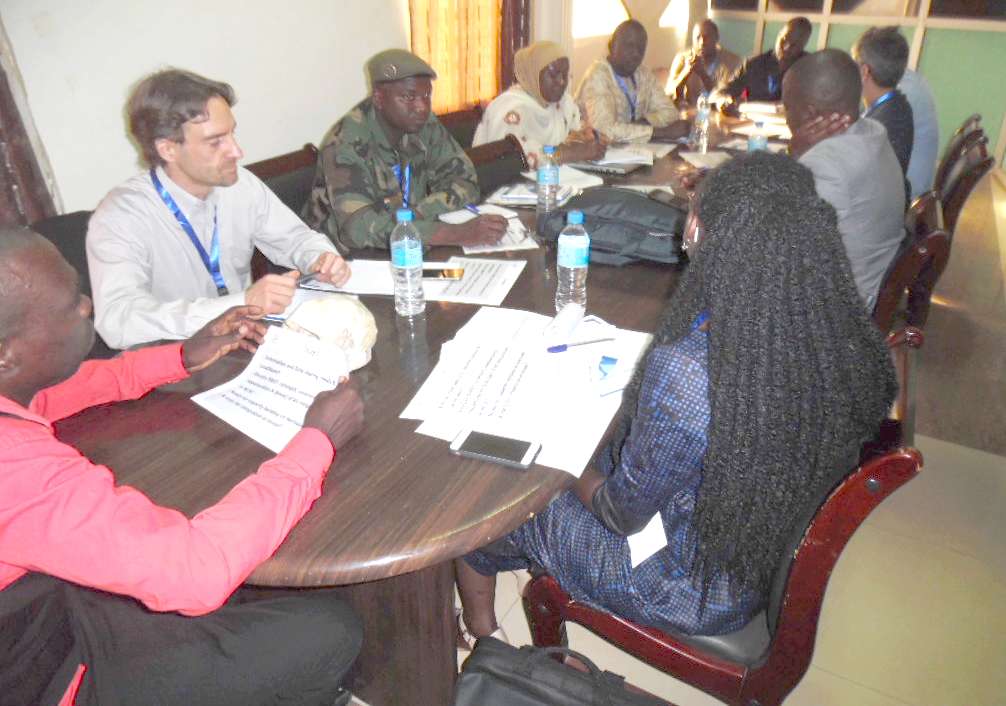
[Photo 4 a, b, c]: Photo of working groups
Group reporting

Useful Links
Contact Us
For information, additional information on the program:
Tel.: +227 20 31 50 14 / 96 89 79 81
E-mail : drp-cce@wascal-ne.org
B.P: 10662 FAST Niamey